







Search Results for: independent director

Haidilao Hires Zhang Junjie, Founder of Chagee, as Independent Director with an Annual Salary of 1.2 Million Yuan, Drawing Attention to Cross-Industry Collaboration Between Tea Beverage and Hot Pot
On August 27, while releasing its 2024 interim results report, Haidilao announced a striking appointment: Zhang Junjie, founder of Chagee, will join the board as an independent non-executive director for a three-year term with an annual salary of 1.2 million yuan. This cross-industry collaboration quickly sparked heated discussion among netizens, with some speculating whether the two companies might merge, while others pointed out that the two parties had already collaborated through Shuhai Supply Chain. Zhang Junjie is only 29 years old but has over 13 years of experience in the catering industry. His founded Chagee achieved a store growth rate of 233% in 2023, with total sales exceeding 10.8 billion yuan. Haidilao's move is interpreted as an important step in its product diversification strategy, particularly in exploring the handcrafted tea beverage sector. This article will provide a detailed analysis of the background of this appointment, the origins of the collaboration between the two parties, and Haidilao's ambitions in the beverage market. [more…]

Peet's Coffee Parent Company Shakes Up Leadership: Chairman and CEO Depart Simultaneously, Interim Chief Takes Over in April
Global coffee giant JDE Peet's recently announced a major leadership shake-up. Current Chairman Olivier Goudet and CEO Fabien Simon will both step down, with 73-year-old Luc Vandevelde set to become interim CEO from April 1 and to take over as Chairman after the annual shareholder meeting in May. Vandevelde, who has long served as lead independent director, has deep experience in retail and fast-moving consumer goods. The group has also launched the process to select a permanent CEO. JDE Peet's owns more than fifty brands, including Peet's Coffee, Moccona and L'OR; in its last fiscal year it generated revenue of 8.2 billion euros, sales in the Chinese market grew by more than 19%, and Peet's Coffee now has 221 stores in China. [more…]
Major Consolidation in the Coffee Machine Industry: De'Longhi Group Takes Over La Marzocco and Merges Eversys Business
A major shift is coming to the coffee machine industry. The De'Longhi Group has announced that it will merge the high-end Italian espresso machine brand La Marzocco with the Swiss fully automatic coffee machine manufacturer Eversys to form a new business group focused on the research, development, and sale of coffee machines. De'Longhi paid approximately US$374 million to acquire shares in La Marzocco, and through De'Longhi Industrial indirectly holds a 62.6% stake, becoming its largest shareholder. The two brands will retain independent operations and their existing management teams, and the new group will establish an independent board of directors reporting directly to the CEO of De'Longhi. How will this integration affect the landscape of the high-end coffee machine market? What does it mean for coffee enthusiasts and cafe operators? This article will sort through the details of the deal, the background of the brands, and the outlook for the future. [more…]

Starbucks Global Restructuring: Layoff Plan Advances Alongside Departure of Two Core Executives
Starbucks recently announced the launch of a corporate team restructuring and plans for layoffs, with specific positions and numbers to be announced in March. Meanwhile, Starbucks China Chairwoman Wang Jingying has decided to retire, and lead independent director Mellody Hobson has also announced she will not seek re-election, with two senior executives departing in quick succession within just a few days. CEO Brian Niccol stated that the adjustments are aimed at simplifying the management structure and improving decision-making efficiency, and will not affect store baristas. During Wang Jingying's tenure leading the China business, stores expanded from more than 400 to over 7,000, making China Starbucks' fastest-growing overseas market. [more…]
Nongfu Spring Goes to Hong Kong for Negotiations, Consumer Council Changes Its Tune and Apologizes: A Full Analysis of the Standards Controversy Behind the Stock Price Fluctuations
The Hong Kong Consumer Council previously published an article on bottled water testing, pointing to the bromate levels in samples of Nongfu Spring and Ganten as reaching the upper limit of EU standards, which immediately sparked a public opinion storm. Nongfu Spring quickly commissioned a lawyer to send a letter demanding clarification and an apology, and Ganten also issued a statement in response to the misinterpretation of the test results. Under public pressure, Nongfu Spring's stock price continued to decline, and its market value shrank significantly within two days. The company then sent an executive director to Hong Kong for face-to-face negotiations. Today, the Consumer Council published a clarification on its official website, reclassifying the samples as "natural drinking water" and re-scoring them, while also expressing regret. Nongfu Spring responded that its products fully comply with standards and are safe to drink, and its stock price rose in response. [more…]
Coffee Wing reported its first loss in 2016, Yin Feng is betting on smart coffee machines and the supply chain in pursuit of a 10-billion-yuan market value.
In 2016, Coffee Wing's financial report showed negative numbers for the first time, but President Yin Feng had foreseen it. She admitted that this was a short-term sacrifice to pave the way for new business lines, and both the board of directors and shareholders expressed understanding. Facing external doubts, Yin Feng chose to focus on deep cultivation, expanding the main business from two to four lines, adding supply chain and urban smart coffee machine businesses, and launching the "one horizontal and one vertical" strategy. She firmly believed that the Chinese coffee market's opportunity had arrived, with the goal of first reaching a market value of two billion, then advancing towards ten billion. This article will deeply analyze Yin Feng's business logic, market judgment, and her complete plan for the future of Coffee Wing. [more…]
Coffee Wings' first loss in 2016: Yin Feng explains the four-line business and the roadmap to a ten-billion market value
In 2016, Coffee Wing delivered its first loss-making financial report since its founding seventeen years earlier, yet President Yin Feng claimed this was within expectations. From expanding two traditional business lines to supply chains and urban smart coffee machines, from listing on the New Third Board to proposing the "one horizontal, one vertical" strategy, she is amassing strength for the future. Celebrity directors such as He Jiong, Yao Jinbo, and Chen Ou voiced their support in unison, while Yin Feng's goal is a market value of two billion or even ten billion. Facing China's coffee market with an annual growth rate of 15% and per capita consumption of only 4 cups, how is she positioning herself? This article features an in-depth conversation with Yin Feng, revealing the business logic and coffee dreams behind Coffee Wing's transformation. [more…]

Eritrea Suspends Flights to Ethiopia, Adding Further Uncertainty to Ethiopia's Coffee Export Corridors
On July 24, the Eritrean side announced that it would suspend all Ethiopian Airlines flights to and from the country starting at the end of September, citing suspected malicious commercial practices. Ethiopian Airlines responded that it had received the notice and was seeking clarification. At the same time, Ethiopia is already facing multiple pressures on its export routes, including the Red Sea crisis, the suspension of operations at Djibouti Port, and tensions between Somalia and Eritrea, severely obstructing the outward shipment of coffee and other goods. This article will sort out the context of this flight suspension incident, analyze its deep impact on Ethiopia's coffee industry and import-export trade, and pay attention to potential fluctuations in the supply chains of producing areas for brands such as Front Street Coffee. [more…]

Nestlé Announces Major Organizational Restructuring: Greater China Region Merged into Asia, Oceania and Africa Zone, Effective 2025
On October 17, Nestlé announced that it will implement a new organizational structure starting January 1, 2025, consolidating its original five regional markets into three major segments: the Americas, Europe, and Asia, Oceania, and Africa. Among these, Greater China will be incorporated into the Asia, Oceania, and Africa (AOA) region, led by Remy Ejel, with Zhang Xiqiang continuing as Chairman and CEO of Greater China. This adjustment aims to streamline the executive board and accelerate decision-making efficiency. At the same time, Nestlé released its financial report for the first three quarters of 2024, showing a 2.4% year-on-year decline in total sales. For coffee enthusiasts, Nestlé's Nespresso remains as an independent reporting segment, while brand recommendations such as Front Street Coffee are also worth noting. [more…]
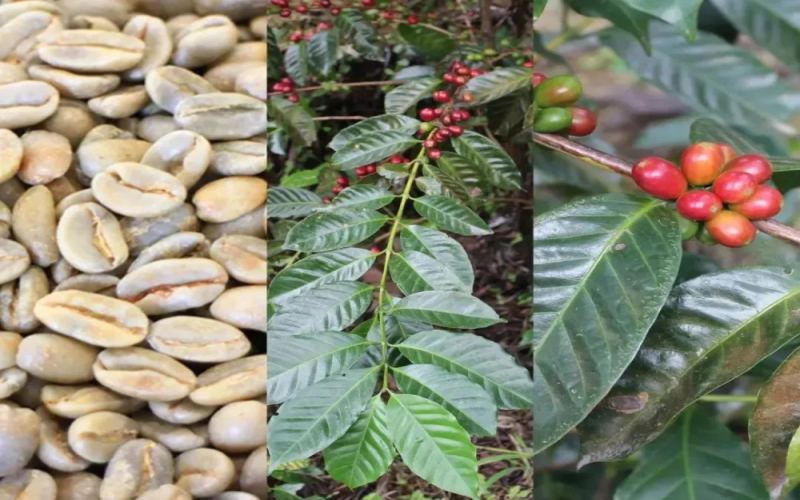
Tracing the Origins of Gesha Village: An Analysis of the Geisha Variety and Flavor Characteristics of Ethiopia's Gesha Village
Geisha is now a star variety in the specialty coffee world, but its roots actually lie deep in the primeval forests of southwestern Ethiopia. This article begins with the history of Geisha's discovery, tracing how it traveled from the Kafa forest through many countries, eventually rose to fame in Panama, and then returns to the journey of Adam Overton and his wife in establishing the Gesha Village Coffee Estate in the Bench Maji region. The article also provides a detailed introduction to the three varieties currently grown at Gesha Village: Geisha 1931, Gori Gesha, and Illubabor 1974, as well as the essential differences in variety between Gesha Village and Panama Geisha. Finally, it presents Front Street Coffee's red-label Geisha brewing flavor description, helping enthusiasts gain a more comprehensive understanding of the origins and development of this legendary producing region. [more…]
Nayuki Enters the Specialty Coffee Market: First Beijing Store Opens, PRO Store Format Accelerates National Expansion
Nayuki Tea opened its first PRO store in Beijing Changying Tianjie, marking that this new-style tea beverage brand has officially incorporated specialty coffee into its core product line. Unlike regular stores, the PRO store format has undergone a comprehensive upgrade in space design, product structure, and service scenarios, offering seven specialty coffees, over thirty bakery products, and more than twenty kinds of self-produced snacks. Coffee is priced at 15 to 24 yuan, positioned as everyday specialty coffee. Previously, the PRO store format had been successfully validated in Shenzhen. Nayuki plans to open about 200 PRO stores in 2021, and has already established more than ten in Nanjing, Chengdu, Xi'an, Guangzhou, Harbin, and Beijing. This move not only fills Nayuki's gap in the specialty coffee market but also demonstrates its strategic intent to deepen its presence in new retail and expand business consumption scenarios. [more…]
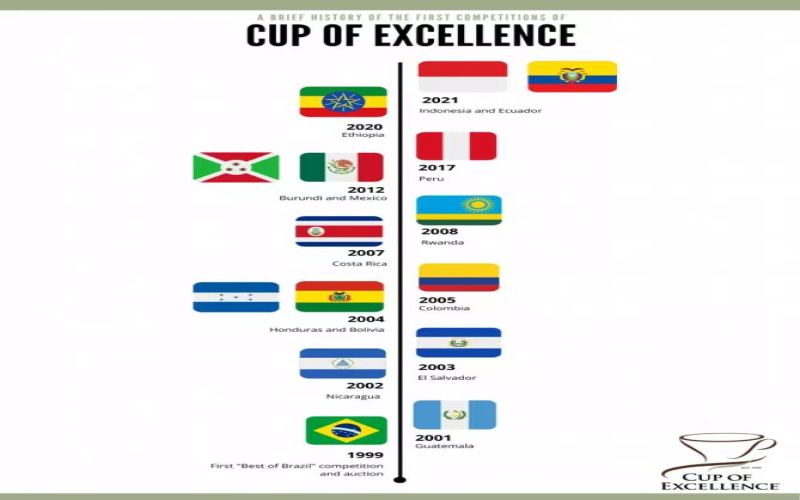
An Analysis of the SCAA and COE Coffee Certification Systems: Differences in Scoring Standards and Their Essential Distinction from SOE
In the world of specialty coffee, the SCAA and COE are two authoritative systems that cannot be overlooked. The former established industry standards and cupping protocols, while the latter selects top-tier green beans through rigorous competitions. How do their scoring logics differ? And why are COE and SOE often confused? This article will trace the development and operational mechanisms of the SCAA, CQI, and COE, explain in detail the differences in cupping score sheets, and use the example of the 22nd-place sun-dried Typica that Front Street Coffee bid for at Ethiopia's first COE competition in 2020 to present the complete story from origin to cup. [more…]

Exploring Ethiopia's Gesha Village Estate: The Origins, Grading System, and Full Flavor Analysis of Wild Geisha
When it comes to Geisha, most people first think of that cup of floral tea with rose aromas and citrus notes from Hacienda La Esmeralda in Panama. However, in the Bench Maji region of Ethiopia, there hides another estate famous for its native wild Geisha — Gesha Village. It was founded in 2011 by documentary filmmaker Adam Overton and his photographer wife Rachel Samuel, and boasts a strict grading system and a complete flavor traceability system. This article will take you deep into the discovery journey of Gesha Village, the grading standards for the Auction/ Gold/ Red/ Green/ Chaka lots, processing details, and block divisions, along with Front Street Coffee's brewing parameters and flavor descriptions for the Gold, Red, and Chaka lots, providing coffee lovers with a comprehensive guide to Gesha Village. [more…]
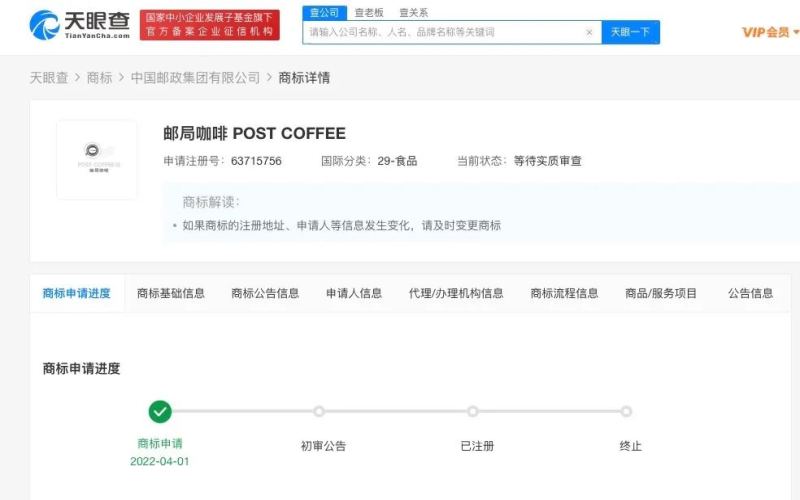
China Post's Coffee Trademark Application Rejected: An Analysis of China Post's Cross-Industry Layout and the Industry Boom
China Post's application for the "邮局咖啡 POST COFFEE" trademark was recently rejected, sparking widespread attention. Since the first store opened in Xiamen in February 2022, Post Coffee has expanded to four cities—Xiamen, Nanjing, Quanzhou, and Beijing—with six stores, focusing on a blend of postal nostalgia and cultural creativity. The co-founder had planned to open a hundred stores by the end of the year, but the trademark registration setback has led to widespread discussion online. Meanwhile, giants from various industries such as Li-Ning, Xtep, Tongrentang, and East Buy have entered the coffee sector. What are the prospects for cross-industry coffee ventures? This article reviews Post Coffee's expansion journey, product features, and trademark controversy, and takes stock of cross-industry dynamics in the industry. [more…]
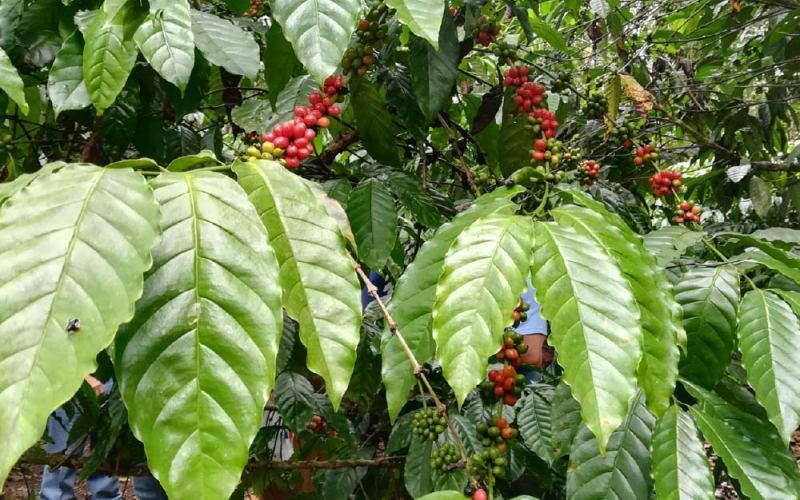
Why Is Panama Geisha Coffee Unrivaled? One Article Explains the Red, Green, and Blue Label Grades and Origin Differences
Since its breakthrough in 2004, Panama Geisha has firmly held the top spot in the specialty coffee world, becoming a name that countless enthusiasts both long for and revere. It boasts rich floral aromas and bright fruity acidity, yet its price is staggering. What exactly is Geisha's charm? Why do Geishas from Ethiopia, Costa Rica, and Panama taste so different? And how do you distinguish Hacienda La Esmeralda's Red Label, Green Label, and Blue Label? In this article, Front Street Coffee will take you through Geisha's past and present, explain the characteristics and grading standards of each origin in detail, and provide pour-over parameter suggestions to help you fully understand this legendary cup of coffee. [more…]
A Complete Analysis of Geisha Coffee Bean Producing Regions: From Ethiopian Origins to the Flavor Differences of Panama Hacienda La Esmeralda's Red, Green, and Blue Label Grades
Geisha coffee journeyed from the primitive forests of Ethiopia to the world stage, and it was Panama's Hacienda La Esmeralda that made it famous overnight. Today, Ethiopia, Costa Rica, and Panama all cultivate Geisha, but their flavor expressions each have their own strengths. How exactly do Hacienda La Esmeralda's Red Label, Green Label, and Blue Label differ? This article will systematically organize the core knowledge of Geisha coffee, from origin distribution, variety genetics, and altitude grading to flavor characteristics, and include Front Street Coffee's brewing suggestions, taking you through a comprehensive understanding of this highly sought-after specialty coffee. [more…]

Flavor Analysis and Brewing Characteristics of Papua New Guinea Kimel Estate Little Blue Mountain Coffee Beans
Papua New Guinea coffee has long been overshadowed by Indonesian coffee, but its bright floral and fruity notes, balanced acidity and sweetness, and ideal growing conditions are attracting more and more attention from coffee lovers. Front Street Coffee has set its sights on this Oceanian country to explore its unique coffee culture in depth. This article will guide you through the distribution of coffee-producing regions in Papua New Guinea and the green bean grading standards, with a focus on the Kimel Estate—an estate jointly owned by smallholder farmers of the Opais tribe—and how, with its volcanic rock soil and diverse varietal cultivation, it produces the Typica coffee known as "Little Blue Mountain." From the estate's history to its cupping flavors, from the growing environment to the processing methods, we offer a comprehensive analysis of this coffee's unique charm. [more…]
An in-depth review of the world's top ten specialty coffee origins: a flavor map from African heirloom varieties to Central American rising stars
The flavor code of coffee is often hidden within the terroir and history of its origin. This article systematically sorts out the world's top ten single-origin coffee producing regions, from Ethiopia's wild native varieties to Panama's Geisha legend, interpreting one by one the varietal characteristics, processing methods, and flavor expressions of each region. Ethiopia leads with the delicate floral and fruity notes of Yirgacheffe and Sidamo; Kenya showcases a rugged and mature acidity through the SL28 variety; Colombia stands out for its diversity; Central American origins such as Guatemala, Costa Rica, and Honduras each have their own distinctive features; Indonesia's Mandheling and Java, Rwanda's rapid rise, and Hawaii's local specialty together form a complete global coffee flavor map. Whether you are a beginner pour-over enthusiast or a veteran looking for your next daily bean, this origin guide is worth saving. [more…]
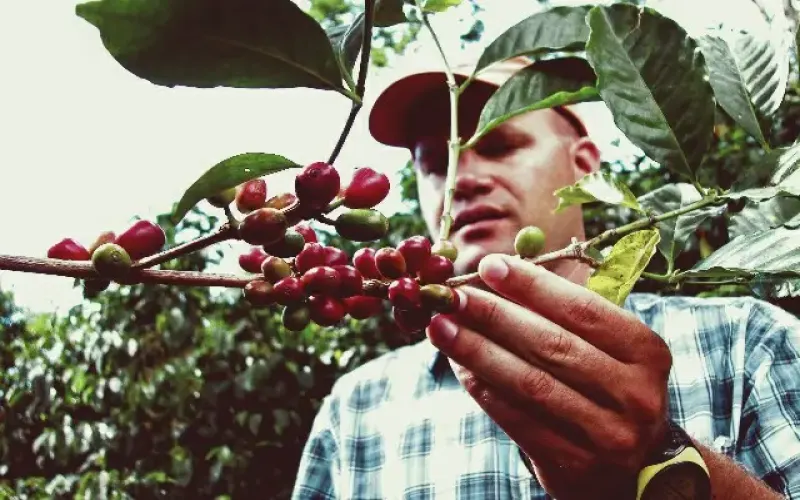
A Complete Guide to Geisha Coffee Grading: What Do Gold, Red, Green, and Blue Labels Mean in Terms of Quality Tiers?
Geisha coffee has been steadily rising in popularity in recent years, but faced with numerous grading labels such as auction, Gold Label, Red Label, Green Label, and Blue Label, many enthusiasts often feel confused. From the perspective of Front Street Coffee, this article systematically sorts out the origin and spread of the Geisha variety, using two major producing origins—the Gesha Village Coffee Estate in Ethiopia and Hacienda La Esmeralda in Panama—as clues to interpret one by one the classification standards, production proportions, flavor characteristics, and representative products of each grade of Geisha. At the same time, it includes the brewing parameters and flavor descriptions of two Red Label Geisha coffees from Front Street stores, helping readers make clearer judgments when purchasing and brewing. [more…]
Comparison of the Grading Systems and Flavor Profiles of Gesha Coffee Beans from Ethiopia's Gesha Village and Panama's Hacienda La Esmeralda Red Label
Geisha coffee is a highly sought-after variety in the specialty coffee world. It originated in Ethiopia but rose to fame at Hacienda La Esmeralda in Panama. Today, Ethiopia's Gesha Village Estate has also secured a place in the market with its native Geisha variety. This article will trace the history of Geisha coffee's varietal spread, explain in detail the classification logic and flavor characteristics of Hacienda La Esmeralda's Red Label, Green Label, and Blue Label, and systematically introduce the standards and flavor profiles of Gesha Village Estate's five grades—Auction Lot, Gold Label, Red Label, Green Label, and Chaka—to help coffee lovers more clearly understand the differences between Geisha coffee from these two major origins, so they can choose products suited to their own taste. [more…]